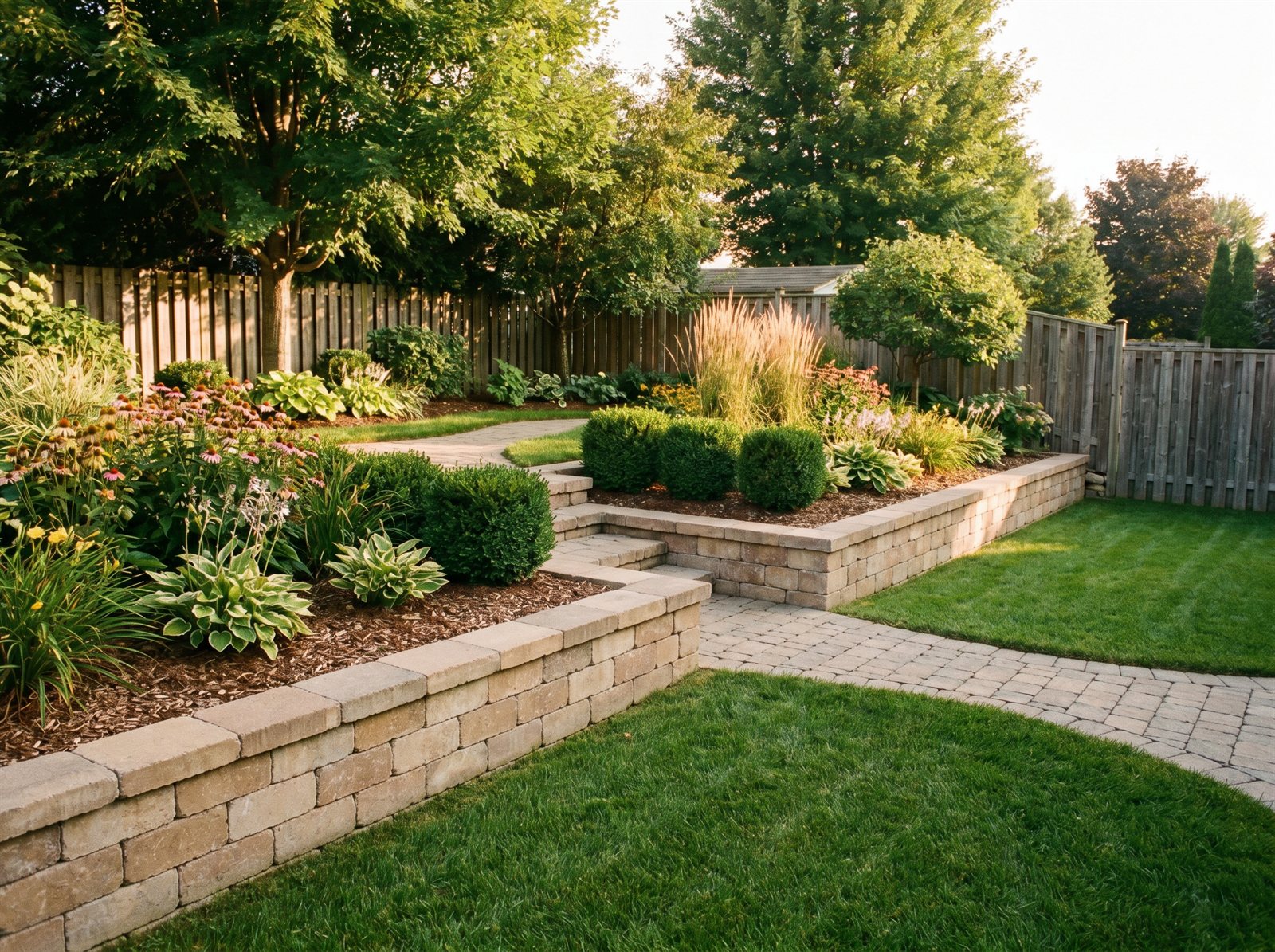
A well-built retaining wall turns a rocky slope into usable space — by following Chelsea's natural relief rather than fighting it.
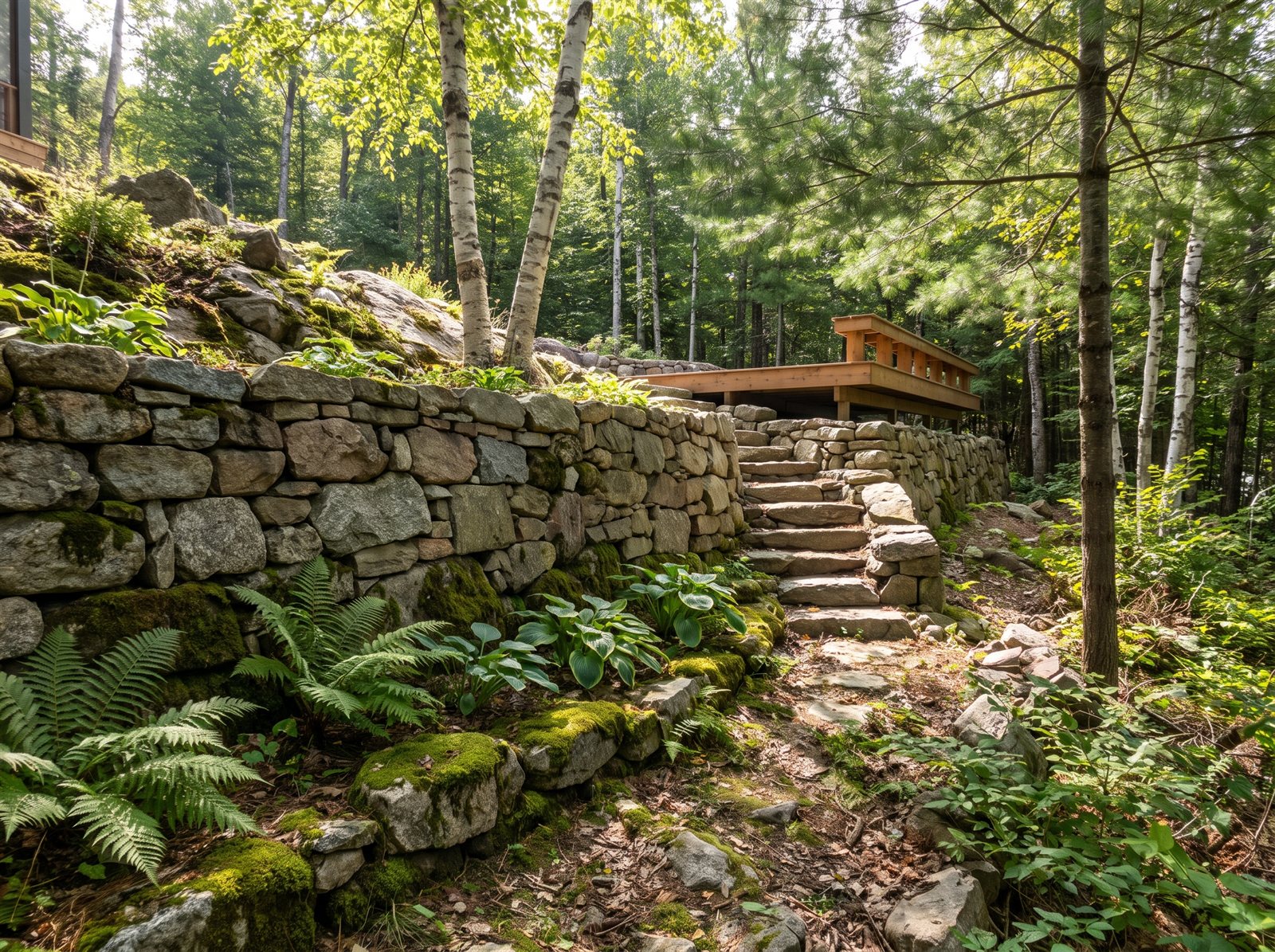
In Chelsea, holding back soil means dealing with rock near the surface, steep slopes and wooded lots along the edge of Gatineau Park. Natural stone and armour stone fit this landscape; block is used too, closer to the house. We anchor the wall onto the rock where it surfaces, manage runoff from one terrace to the next, and respect watercourses and environmentally sensitive areas. The result creates terraced levels, patios and level gardens that last.
We serve the whole Chelsea area: Old Chelsea, Farm Point, Mont-Cascades, Burnett, Wakefield, La Pêche and out to Gatineau. The home consultation is free with no obligation.

In Chelsea, bedrock is often right near the surface. Instead of treating it as an obstacle, we use it: we anchor the wall directly onto the rock, adjust the line to follow the outcrops, and let natural stone and armour stone match the relief. The result settles into the wooded landscape instead of slicing through it.
On a slope, it all comes down to runoff. We build every wall as a drainage system as much as a retaining one: compacted base, clear-stone backfill, a perforated drain, a geotextile membrane and terraces that slow and steer the water. Near a stream, a lake or Gatineau Park, we plan the whole thing to protect the watercourse and respect environmentally sensitive areas.
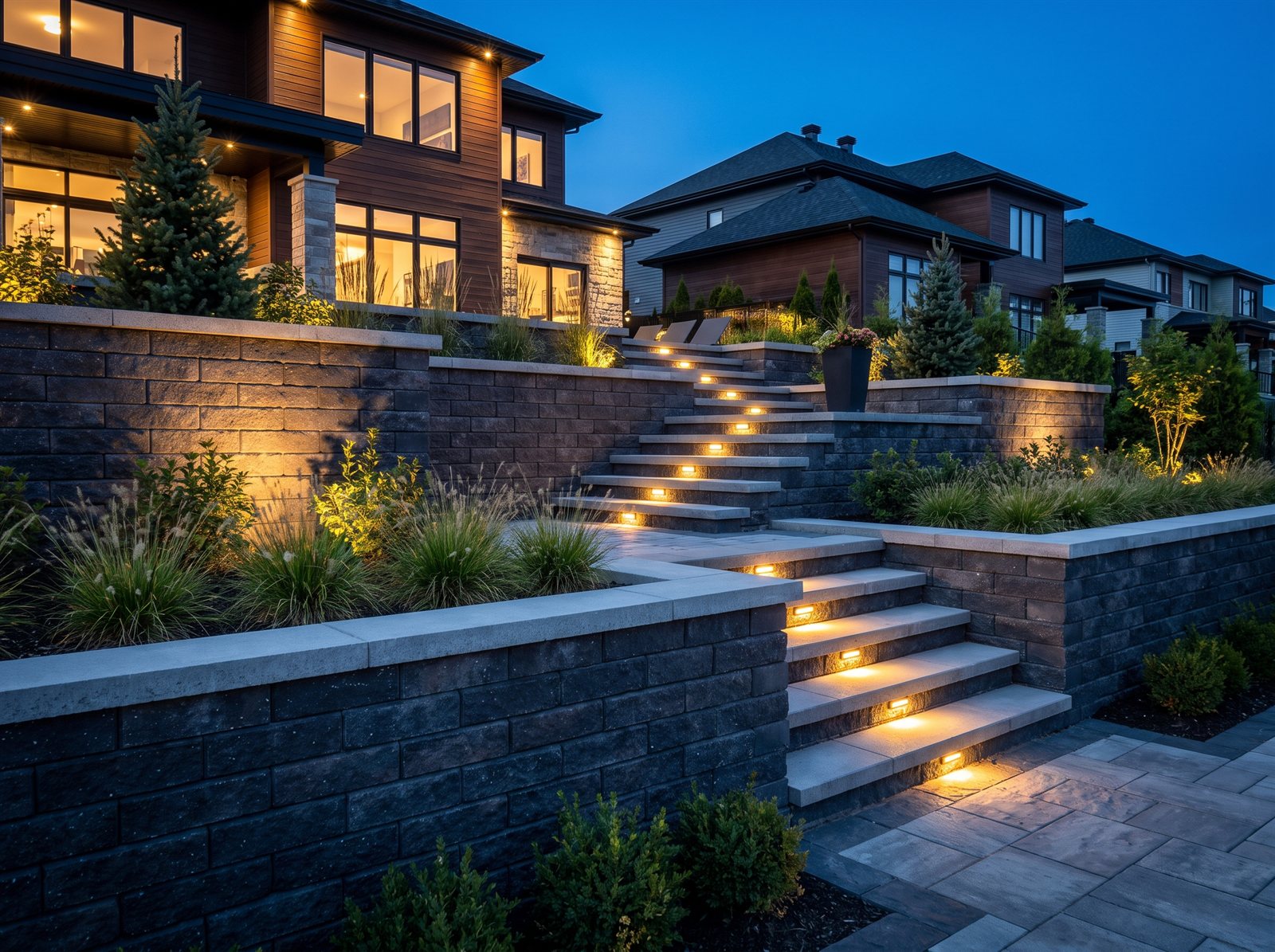
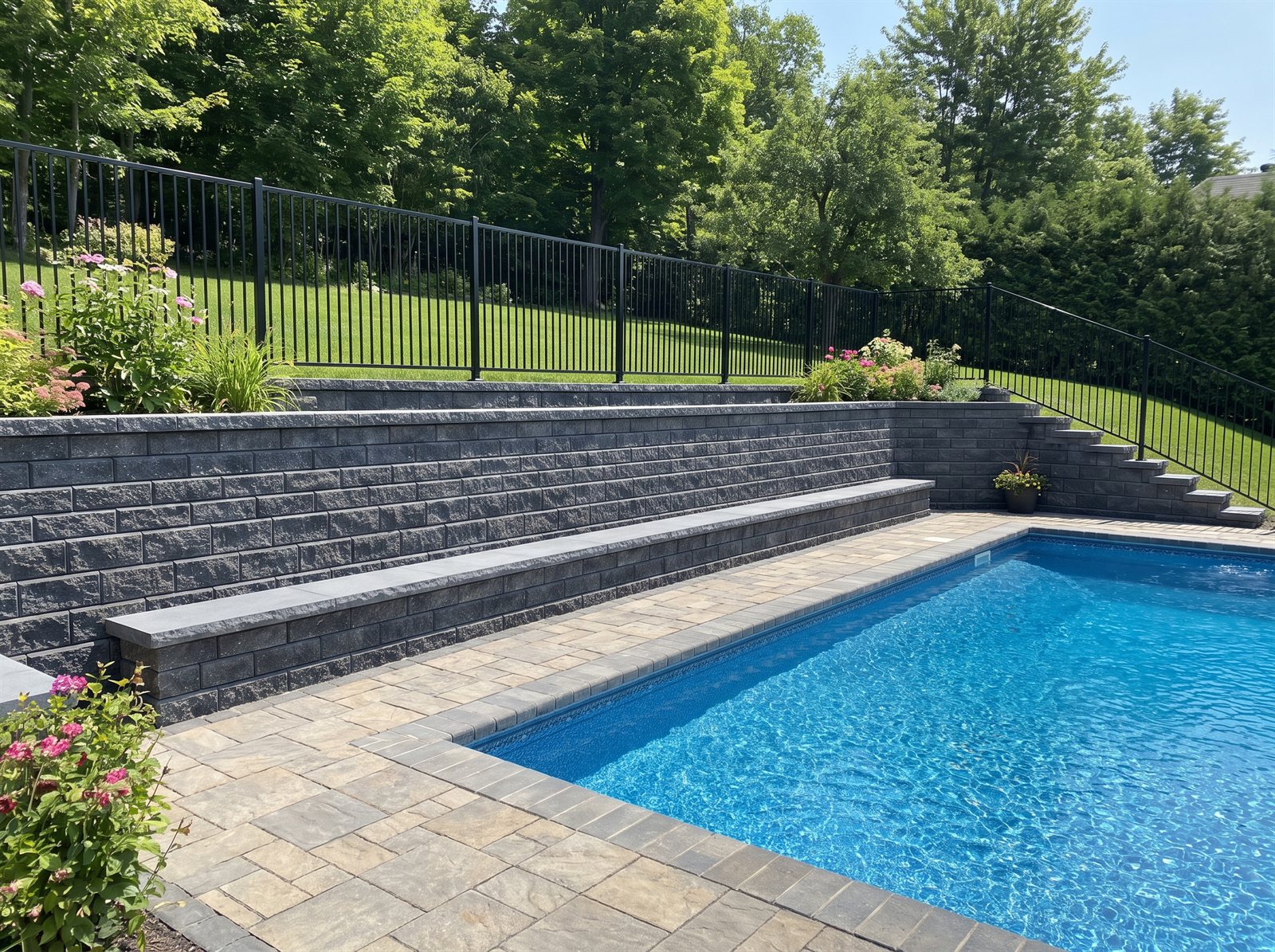
We don't subcontract. The Verano team is on site from start to finish, supervised by Pierre-Michel Légaré. We know Chelsea's rocky, wooded lots, the shoreline buffers and rules that govern work near water or Gatineau Park, and we turn steep grades into usable terraced levels linked by steps.
Every project includes a free home consultation, a detailed plan and a fixed price with no surprises. RBQ-licensed and insured.
We build retaining walls throughout the area: Old Chelsea, Farm Point, Mont-Cascades, Burnett, Wakefield and the La Pêche area. Whether it's terracing a rocky sloped yard, holding back a wooded bank along a driveway or creating level terraces near a watercourse, we travel to you for free to assess your project.
A wall often goes hand in hand with interlock pavers in Chelsea: we plan both together so the grades, runoff and finishes line up perfectly with the terrain. To book an appointment, call Pierre-Michel directly at (819) 962-3546.


Yes, and it's often an advantage. In Chelsea, bedrock is frequently close to the surface: instead of digging a deep footing, we anchor the wall directly onto the rock, which gives an extremely stable base. We work with the rock rather than against it, adjust the wall's line to follow the outcrops, and use armour stone where needed to match the land's natural relief.
On Chelsea's wooded, rocky lots, natural stone and armour stone blend into the landscape: their tones and irregular shapes settle in among the outcrops and mature trees. Architectural block is still a clean, economical option for sharper lines closer to the house. We choose based on the height being held, the look you want and the budget, often combining materials on the same lot.
Yes. Many Chelsea lots border a stream, a lake or Gatineau Park, and work near water or in sensitive areas is governed by shoreline buffers and municipal rules. We check what applies to your lot, plan the wall and drainage to protect the watercourse, and walk you through the steps before we start.
We terrace the slope into a series of levels held by walls and linked by steps. Each level becomes usable flat space — patio, garden, play area — and runoff is managed from one terrace to the next instead of racing down the grade. It's the best way to reclaim a too-steep yard on Chelsea's sloped lots.
The price depends on a few things: the wall's height and length, the material (architectural block, natural stone or armour stone), how complex the drainage is, and access to the site. A small garden wall and a large structural retaining wall aren't in the same range. We travel to Chelsea for free to assess your project and give you a fixed, detailed quote with no surprises.
A well-built wall lasts for decades. The key is the base and drainage: a compacted foundation, clear-stone backfill and a drain that moves water out before it freezes. That's what keeps a wall from bulging or leaning over time. Walls that fail early are almost always the ones where drainage was skipped.